Philosophical Theories of Consciousness: A Comparative Map

TL;DR: A map of the main theories of consciousness, not a pick of a winner. Epiphenomenalism, functionalism, emergence and identity theory each solve part of the problem and get stuck on another. Thinkers like Kim, Papineau, Stoljar and Weisberg sharpened what would count as a real explanation. No single theory has closed the case, but the field got better by dropping simple either-or answers.
Consciousness is the most intimate fact of life and the hardest thing to explain. We know it directly, and we can't doubt it. Pain hurts, colors show up, and a thought feels like something from the inside.
But how this first person side links up with third person science is still one of the deepest problems in philosophy.
This is a map of the main ideas from the list. The history, epiphenomenalism, functionalism, emergence, identity theory, and the people who shaped it, like Papineau, Flanagan, Goldstein, Stoljar, Weisberg and others.
The goal is not to pick a winner. It's to show where each view is strong, where it gets stuck, and which questions still drive the field.
If you're new to this, here is the two minute version. It's a map and not a final answer. Each part explains one idea in plain words and then shows where it helps and where it struggles. You don't need to agree with all of it. You just need to see the options clearly.
How the debate got here
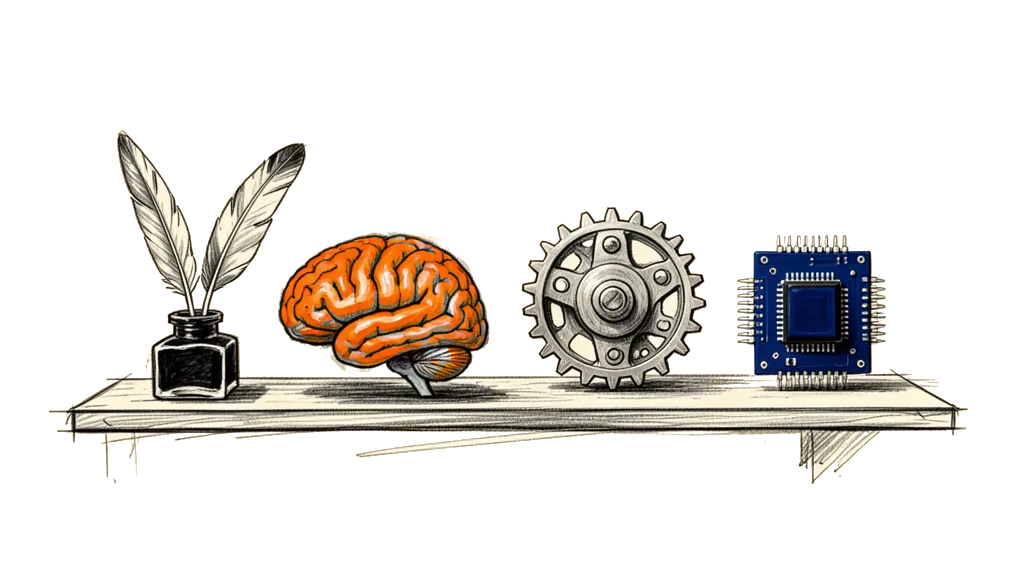
The modern debate grew out of a few turning points. Cartesian dualism split thinking substance from extended substance, and that gave us the problem of how mind and body act on each other.
Then empiricism and associationism moved the focus to what is in the mind and to how the mind works. Behaviorism tried to leave inner states out, but that was too thin for what it is like to be conscious.
Cognitive science and neuroscience brought the mind back, as a system that processes information. And today philosophy of mind moves between reductive physicalism, non-reductive naturalism, dual aspect views, panpsychism and new forms of idealism.
One thing keeps coming back. A theory that ignores first person experience ends up with nothing to explain, and a theory that ignores science ends up with a weak method.
Epiphenomenalism

Epiphenomenalism says that conscious states are real but they don't cause anything. The brain causes the experience, but the experience does not change what you do.
People take it seriously because it keeps the physical world closed, so only physical things cause physical things. It also accepts that experience is real, and it avoids the crude claim that "consciousness is an illusion".
But it's hard to defend. If consciousness has no causal role, it's not clear why it would evolve at all. It's also hard to say how we can report on our experience if the experience does nothing. And it risks making the inner side just a decoration.
So epiphenomenalism is a good stress test. It shows how hard it is to keep both a strictly closed physical world and a strong belief that experience is real.
Functionalism
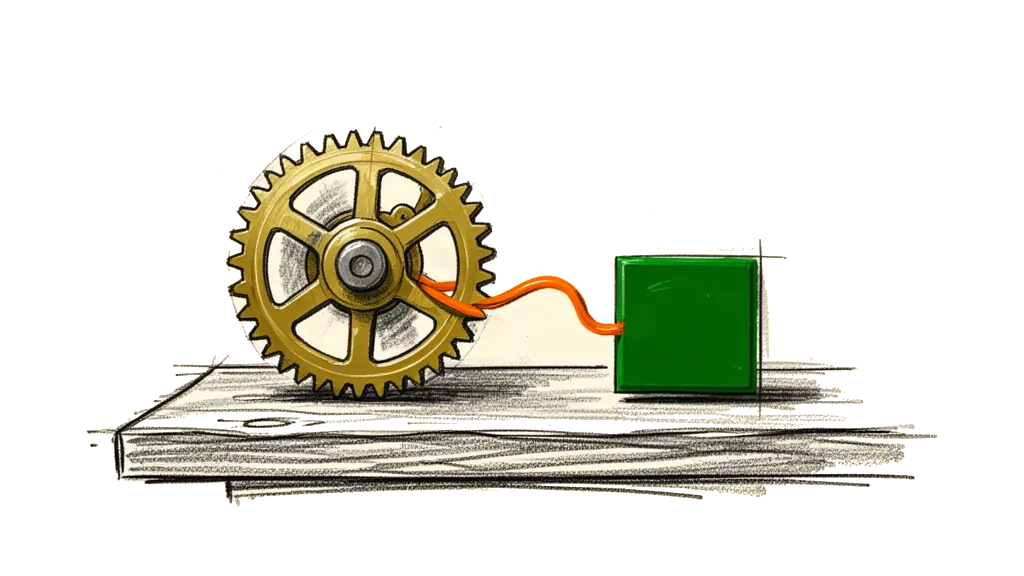
Functionalism says a mental state is what it does and not what it's made of. A state is pain if it plays the pain role. It's caused by damage, it makes you pull away, and it works together with your beliefs and desires in the usual ways.
It fits well with cognitive science. It allows multiple realizability, so a brain and a machine could share the same mental functions. And it gives a strong way to explain thinking and behavior.
The problem is qualia. The functional role may explain how information gets processed, but it's not clear it explains how it feels. The "hard problem" pushes back here. A full functional map may still say nothing about why there is something it is like.
So functionalism is something we can't do without for the structure of the mind, but many say it's not a full theory of consciousness.
Emergence
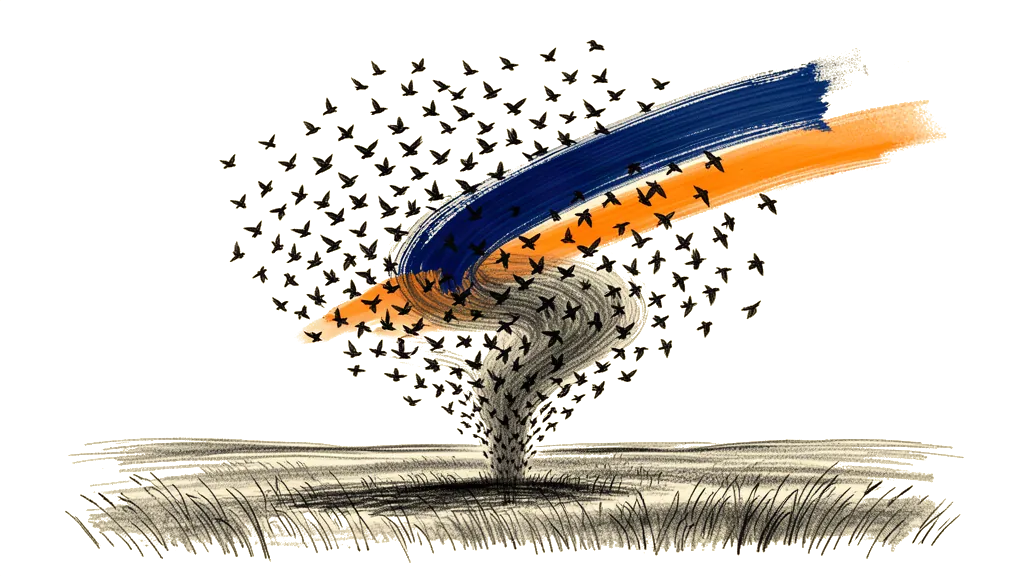
Emergence says consciousness comes out of complex physical systems in ways that are new compared to the lower level.
There are two kinds. Weak emergence means the higher level patterns are a surprise, but in principle you could derive them. Strong emergence means really new causal powers show up that you can't reduce to the base laws.
It's attractive because it fits with the rest of science. It explains why consciousness shows up at certain levels of complexity, and it gives psychology and phenomenology their own room.
The risk is that "emergence" turns into a placeholder word. It needs formal mechanisms behind it, like dynamics, network constraints or information geometry.
Identity theory
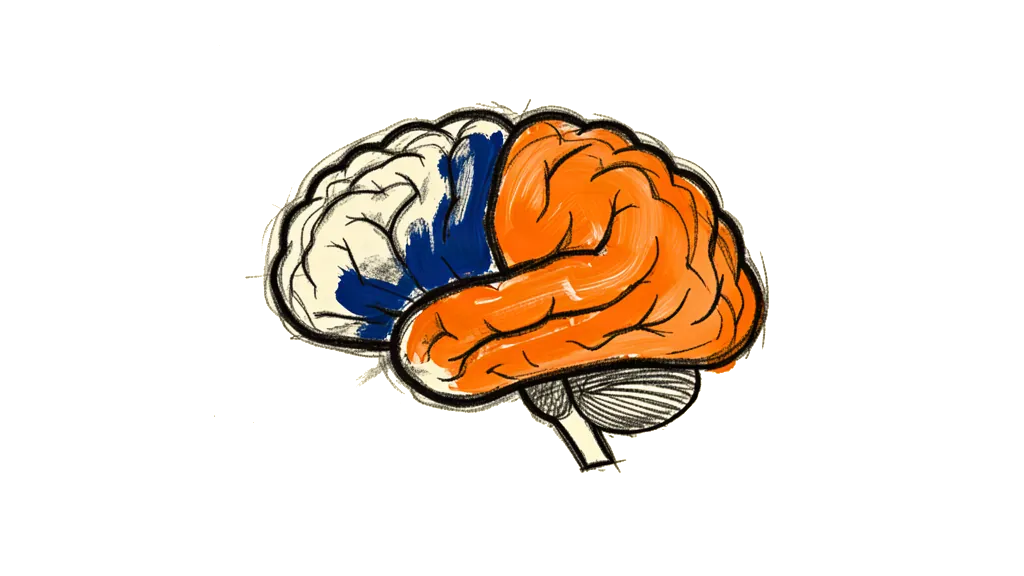
Identity theory says mental states are the same thing as brain states. For a long time this was one of the strongest tries to make the mind part of nature without dualism.
The classic form is type identity, so each mental type matches one neural type. Newer versions refine this. There are token identities with more than one kind of explanation, neurobiological realism without a strict one-to-one match, and accounts of whole states spread across the brain.
The objections are that multiple realizability puts pressure on strict type identity, that saying "it's the same thing" can just describe qualia again instead of explaining them, and that first person and third person words are still hard to bring together.
Still, identity theory is the base of modern neurophilosophy.
Kim, Papineau, Flanagan and Goldstein

Jaegwon Kim is central to the debate today because of the causal exclusion problem. If physical causes are enough, there is no causal work left for mental causes. So non-reductive physicalism risks falling into either reductionism or epiphenomenalism.
Kim's pressure forced philosophy to get much sharper on mental causation. You can agree with him or not, but the way he named the problem changed the field.
David Papineau defends a broadly physicalist view and puts a lot of weight on causal arguments. He often pushes for a clear reduction. If mental events are part of causal chains, and those chains are physically closed, then mental events must be physical.
What he brings is strategy. Keep metaphysics in check with causal science, don't blow up the mystery, and treat consciousness as part of nature even if it's hard to think about. His critics say causal closure alone does not close the explanatory gap.
Owen Flanagan is known for bringing philosophy, cognitive science, psychology and ethics together. He rejects crude scientism, and he also rejects pure armchair metaphysics.
For him you have to study consciousness from many sides at once. A good human life, feelings and practical life all matter when you build a theory. Theories are not just true or false, they also shape what kind of minds and what kind of societies we build. Flanagan keeps the theory connected to real life.
Rebecca Goldstein's work keeps coming back to clear reasoning, intellectual honesty and the ethical stakes of ideas. In the consciousness debate that matters.
Don't make category errors that only look smart. Keep your concepts precise when a lot of fields push on them at once. And keep the person in view and not only the mechanism. Her contribution is less one technical doctrine and more a method. Clear argument is the best guard against confusion that is just in fashion.
Fifteen hard questions

A good way to compare theories of consciousness is to ask all of them the same 15 hard questions.
One, what is your ontology, so what is there at the most basic level. Two, what is your account of qualia. Three, does consciousness cause anything. Four, how does your theory explain that we can report it. Five, what role does neuroscience play.
Six, can your view explain why consciousness feels like one thing. Seven, what about the self and agency. Eight, could AI be conscious on your view, in principle. Nine, what can we test, if anything. Ten, how does your theory handle mental illness and altered states.
Eleven, does it work across species. Twelve, how do norms and values fit in. Thirteen, what does your theory deny. Fourteen, what would prove it wrong or really weaken it. And fifteen, what gaps are still open even in your best case.
Most theories look strongest on 4 to 6 of these and weaker on the rest.
Nev, Hardcastle, Stoljar and Weisberg

"Nev" comes up in comparisons, often in talks about how to explain things and how not to be dogmatic. The lesson from this line is that a lot of dead ends in consciousness theory come from picking one single way of explaining too early.
A good way to read it is pluralism in method with discipline in ontology. You allow different levels of explanation, but you insist that they fit together.
Valerie Hardcastle's work is about using neuroscience with care and not reading too much into the categories of folk psychology. For a theory of consciousness that matters a lot.
What the brain does doesn't map one-to-one onto the labels philosophy inherited. Cleaning up concepts is part of real progress. And naturalism has to follow the evidence and not slogans. Her work makes the bridge between careful philosophy and scientific realism stronger.
Daniel Stoljar is best known for the "ignorance" strategy about the explanatory gap. Maybe it only looks impossible to get consciousness from physical facts because our idea of the physical is still limited.
That matters because it stops a fast jump, from "we can't explain X right now" to "X is in principle non-physical". Stoljar keeps a humble but strong option open. Our theories are incomplete, and reality is not split in two.
Josh Weisberg works on how explanations are built and on the shape of the hard problem itself. He helps show where the confusion comes from.
He separates what we want to explain, which is access, report and the felt side. He separates the kinds of answer we ask for, which are mechanism, constitution and grounding. And he separates gaps in the world from gaps in what we know. He is a map maker. Better maps get rid of fake fights and make the real ones sharper.
Where the field stands
A mature view today often puts together functional and computational models for thinking, neurodynamic models for how the brain ties it all together, philosophy of what experience is like and what grounds it, and a pluralism in method that is kept honest by data.
No single theory has closed the case. But the field got better because it stopped accepting simple either-or answers.
It's still hard, and not because we have no data. It's hard because we try to bring together very different kinds of data. How life feels right now, what neurons do, formal models, and what we believe exists.
The people on this map disagree on a lot. But they share one thing. They force us to be clear about what would count as a real explanation, and that is progress.
A few words in plain English

A few words in plain English, if you need them. Consciousness is your felt inner experience, what it is like to be you. Physicalism is the view that reality is fully part of nature and physics. Dualism says mind and matter are deeply different in at least one important way.
Monism says reality is in the end one kind of thing or one basic principle. Emergence means complex systems can show new patterns that you can't see from their parts alone. Qualia are the felt qualities of experience, like the redness of red or pain as it feels. And the explanatory gap is the gap between describing what the brain does and explaining how it feels.