Governing governance: Why human consensus is harder than code

TL;DR: Governance is the method of finding consensus between humans, and it gets harder the bigger the group. Voting should be the last resort, after people sat together and tried to find a solution. Signaling, delegated voting and clear communication matter more than code.
I’ve been following the blockchain space for quite some time, mostly by coincidence because I live in Berlin. We saw a massive amount of activity there, starting with the early days of Bitcoin, followed by the Ethereum Foundation, and countless meetups. That environment is how I ended up deep in the blockchain world.
While we spend a lot of time engineering protocols, there is a topic that raises more questions than answers, yet is absolutely critical to discuss. Governance.
What governance actually is

So what actually is governance? It is simply the method of finding consensus between humans.
We do this all the time. If we were organizing a dinner or a conference, we would discuss the food or the seating arrangements. In small groups, this is intuitive. But as groups get larger, consensus becomes exponentially more difficult. Even in massive governance systems, it often ends up being just a small handful of people actually making the decisions at the end of the day.
When we imagine "classic" governance like national elections, we have some technical requirements. I want my vote to be private, so we need secrecy. I want to know my vote was counted, so we need verifiability. And we need eligibility, so no one is creating fake votes out of thin air.
But ultimately, we are just trying to figure out what everybody thinks. And that is where the trouble begins.
Voting should be the last resort

Sometimes, strict voting systems give us results like Brexit, 51.9% to 48.1%.
What does a result like that actually tell you? To me, it doesn't represent a "will of the people." It tells me that we have no clue whether we should stay or leave. It tells me the community is divided. Yet, we take a result like that, accept it, and promote it as the absolute decision.
I haven’t solved governance, and I don't think anyone has yet. But I believe one thing is clear. Voting should be the last resort.
A single person has a clear will. A group often just has a choice between A and B. Perhaps voting should only happen after we have exhausted all collaborative approaches, after we have sat together, discussed, and spent energy trying to find a solution. We shouldn't jump straight to a binary vote.
Who actually participates

In the traditional open-source world, we have the concept of the BDFL (Benevolent Dictator For Life). You see this in Linux, WordPress, and Python.
Recently, Guido van Rossum, the inventor of Python, stepped back from his role because he couldn't deal with the community discussions anymore. He simply got tired of the conflict.
In open source, you can always "fork" the project (copy it and go your own way), but many people don't want to fork. It splits the network effect. Now that we are building decentralized systems, we have to ask who actually participates. There is the infrastructure, so the nodes and miners securing the network. There are the users, the people building applications on top. And there are autonomous entities, smart contracts that might have "rights" or interests in the protocol.
Many or few, experts or crowd

We have come up with different ways to weigh votes in blockchain, such as Proof of Stake (wealth = power) or Proof of Work (computational power = power).
A major question we face is whether we place more power in the hands of the many, or the few. The assumption is often that having "skin in the game" (a high financial stake) makes you act honestly and for the well-being of the network. But is that true?
Even if you assume honesty, interests are rarely aligned. Miners want high fees. Users want zero fees. Who is right?
Then there is the issue of experts and the crowd. What if you have a group of technical experts who know the mathematical truth, but the user base disagrees? We see similar problems in politics and on platforms like Reddit or "Crypto Twitter," where propaganda and influence campaigns drag people in certain directions.
Often, voting becomes a rivalry rather than a search for the best solution. And many voters don't even understand what is being voted upon.
Liquid democracy
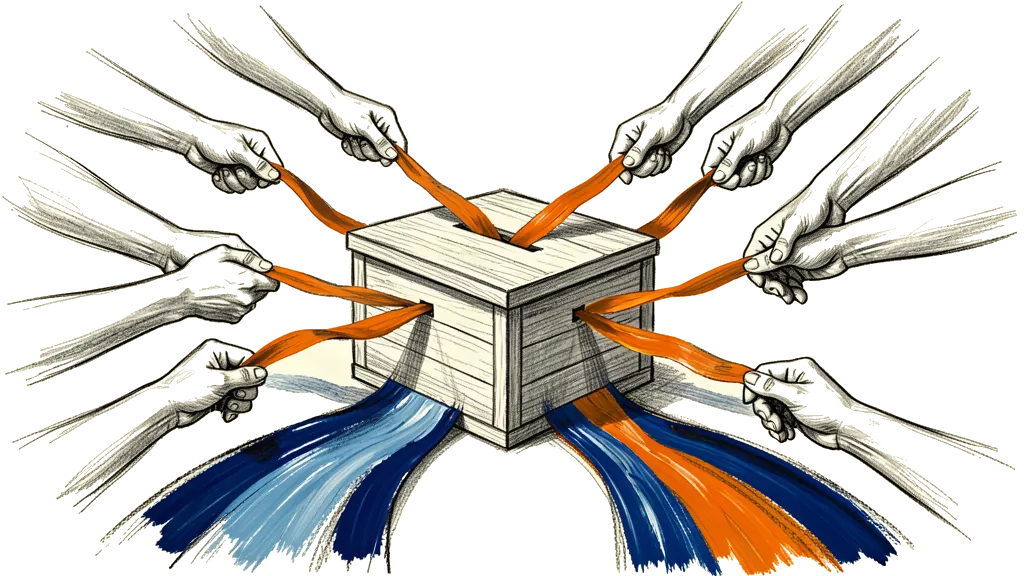
So, how do we solve this? I believe the answer lies in Liquid Democracy and better communication.
The first part is signaling over binding. We shouldn't always use binding votes immediately. We need "signaling," an easy way for the community to express an opinion on a proposal without it immediately executing code. This gauges sentiment before a hard decision is made.
The second part is delegated voting. If you own shares or tokens, you have a voice. But you might not have the technical expertise (or the time) to study every protocol update. You should be able to delegate your vote to an expert, a developer, or a community leader you trust. And you should be able to withdraw that delegation instantly if you disagree with their choices.
This also solves a security problem. You shouldn't have to use your "cold storage" (secure savings) to vote. You should be able to sign a message that delegates your voting power to a different key, allowing you to participate without putting your assets at risk.
A human problem
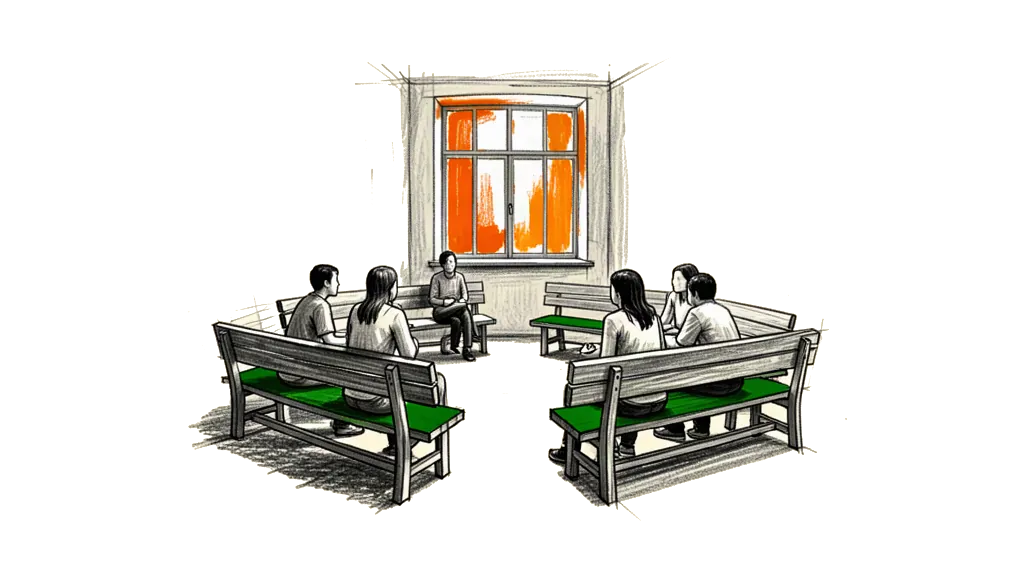
We spend years implementing technology, writing code, and building mathematical proofs. But governance is not a technical problem. Governance is a human problem.
If we don't focus on the "visual layer," so the interfaces, the forums, the education, decentralized projects will fail.
Proposals need to be written clearly. We need discussion platforms where people can ask questions and get real answers, not just propaganda. For an open-source project to govern itself, transparency is key. It’s not only publishing code, it’s also explaining the process, the roadmap, and the "why" behind the decisions.
We haven't solved it yet, but we need to stop treating governance as a software update and start treating it as a human collaboration.