AI Revolution: Eric Schmidt’s Insights on the Future of Technology and Global Competition

TL;DR: Eric Schmidt expects very large context windows, AI agents and text to action in the next 1 to 2 years. Top models cost somewhere from $10 billion to more than $100 billion, so the gap to everyone else keeps growing. He says Google fell behind partly because of its culture, and that AI will hit low-skill jobs most.
A summary of an interview with Eric Schmidt, the former Google CEO. You can read the full transcript here https://www.emino.ai/2024/08/18/ai-revolution-eric-schmidts-insights-on-the-future-of-technology-and-global-competition/ and watch the interview here.
https://www.youtube.com/watch?v=33LcU8vfnR0 https://youtu.be/33LcU8vfnR0?si=ow9WTS6823Q7hPLf
Agents, capital, chips and energy
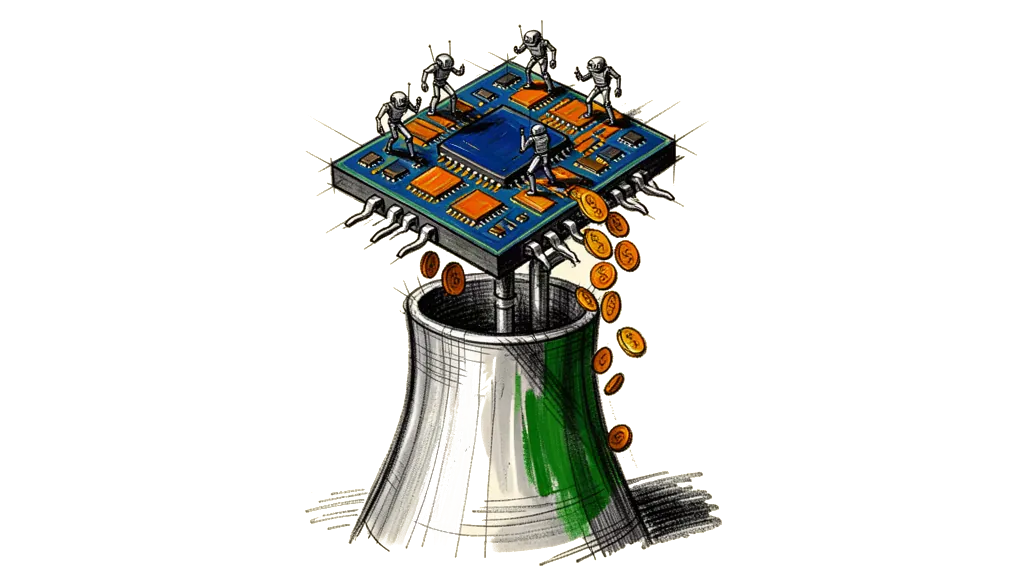
Schmidt says AI is moving very fast, and he sees three big things coming in the next 1 to 2 years. Very large context windows, AI agents, and text to action, so systems that turn what you write into executable code. He thinks this will have a massive impact, maybe bigger than social media.
He also sees the gap between the frontier models and everybody else getting wider. Building these models takes enormous amounts of capital and compute, somewhere from $10 billion to more than $100 billion for the top systems. So only a few companies and countries can really compete at the top.
It's not only about software. It's also about chips and energy. NVIDIA dominates the AI chip market right now because of its CUDA architecture. And Schmidt says the US needs to work with Canada on AI, because Canada has the clean energy that the huge data centers need. Then there is the race between the US and China, which is also a national security question. He thinks the US is about 10 years ahead of China in chip technology.
Google, jobs and misinformation
On companies he is very direct. He says Google fell behind in AI partly because of its workplace culture. Startups and founder-led companies are often better at driving innovation, because they are hungrier and work harder.
He also talks about the downsides. AI will likely hit the labor market, mostly low-skill jobs, while high-skill, college-educated people will work with these systems and probably be fine. And he is worried about misinformation, especially on social media and during elections. He sees it as a major threat to democracy that AI could make worse, and he says people need critical thinking to deal with it.

A few more points from the interview. He wants better AI resources for universities, so research in the US stays competitive. And his advice for founders is to prototype fast and use AI tools to build the business.

Ten quotes, word for word
Here are 10 quotes from Eric Schmidt, word for word.
- "In the next year, you're going to see very large context windows, agents, and text action."
- "The gap between the frontier models, which there are now only three, I'll review who they are, and everybody else appears to me to be getting larger."
- "Sam Altman is a close friend. He believes that it's going to take about $300 billion, maybe more."
- "I like to think of CUDA as the C programming language for GPUs."
- "Google decided that work-life balance and going home early and working from home was more important than winning."
- "The most interesting country is India because the top AI people come from India to the US and we should let India keep some of its top talent."
- "I fundamentally believe that the sort of college education high skills task will be fine because people will work with these systems."
- "You really do need to understand how these systems work."
- "The rich get richer, and the poor do the best they can."
- "I'm telling you that the ability to prototype quickly, part of the problem with being an entrepreneur is everything happens faster."